
Fitbit Edge at $179.99: one reviewer calls it restraint, another calls it undercooked
Two October reviews of Google's Fitbit Edge agree on the seven-day battery and split over whether leaving out NFC, a speaker and workout depth is a feature or a flaw.
- Section
- Gadgets
- Published
- Read
- 4 min
- Sources
- 2
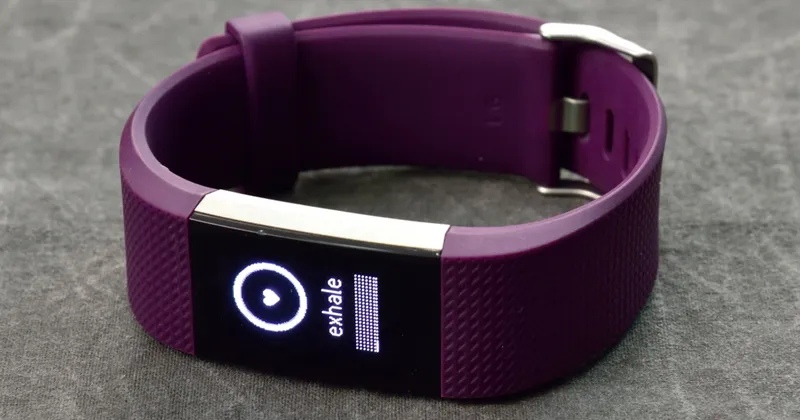
Google’s Fitbit Edge costs $179.99, or $219.99 for the Steph Curry Edition. It sits between a bare-bones band and a full smartwatch, and the first reviews show exactly how awkward that middle ground is. On October 26, Android Authority and Droid Life published reviews on the same day and reached opposite verdicts about the same watch-shaped tracker.
Joe Maring at Android Authority called it “stuck in the middle,” and wrote that it is “simply too undercooked and missing too many features” to be his everyday wearable. Kellen at Droid Life recommended it for anyone who wants a fitness tracker that mostly stays out of the way. Reading both is a better guide than either alone, because they disagree about the product’s purpose rather than about the facts.
Where they agree
Start with the shared ground, because it is substantial.
- Battery: Google rates the Edge at up to seven days. Maring’s unit ended day seven with a little over 10% left, after six tracked workouts and nightly sleep tracking. Kellen got over a week on his replacement unit.
- Sensors: heart rate, ECG, SpO2 and skin temperature, plus an always-on AMOLED display, a physical button, built-in GPS and 5ATM water resistance.
- Heart rate and detection: Maring found heart rate accuracy good and automatic workout detection effective. Kellen counts detection across up to 100 workout types, pickleball included.
- Design quirks: Kellen notes slow charging, about 90 minutes, and bands that need considerable force to click in; his first review unit arrived with a defective band connector.
None of that is controversial. The disagreement starts with what is absent.
The list of absences
Maring’s inventory of what the Edge leaves out is long, and it is the heart of his case:
- No NFC, so no Google Wallet payments.
- No microphone or speaker, so no voice replies, calls, audible alarms or workout alerts.
- No calendar app.
- Watch faces and tiles can be customised only in the Google Health app, and many settings, including always-on display and accessibility options, cannot be reached on the device.
- The side button cannot be remapped and the exercise list cannot be reordered.
His workout complaints are more specific, and they matter to anyone who trains. There are no vibration alerts for mile splits or goal progress. Workout screens cannot be customised, so heart rate zones and pace cannot be viewed together. Strength training lacks set, rep and weight tracking, and Google has not said whether that is coming. On a 6.22-mile run the Edge logged 6.25 miles, while Strava and an Amazfit watch logged 6.42 miles. He called the GPS result disappointing.
Kellen’s cons are shorter and more about hardware: frequent background syncing triggers an on-screen notification each time, and the custom operating system is limited and is not a full smartwatch.
Restraint as a feature
Here the two reviews part ways. Droid Life treats the missing pieces as the point. The Edge runs a custom OS with 13 or more watch faces, adjustable vibration (low or high), notifications with call and text alerts, phone media controls, and on-device apps for Google Maps, Google Health, ECG, weather, alarms and timers. The package includes an Active Band valued at $39.99. For a reader who wants steps, sleep and a button, that is plenty, and Kellen suggests it may be the best of the Fitbit Air, Fitbit Edge and Pixel Watch 5 options for that reader.
Maring’s answer is the price. At $179.99 he calls it overpriced for what it offers, and points to alternatives that each give something up elsewhere: the Fitbit Air at $99 for casual tracking, the Pixel Watch 4 or 5 for smart features and workout tracking, the Amazfit Active 3 at $170 for GPS, physical buttons and stronger workouts, and the Samsung Galaxy Fit 3 at under $60 for a similar health feature set.
Both reviews name the Fitbit Air and the Pixel Watch as the neighbours. The honest reading is that the Edge’s value depends on which neighbour you would otherwise buy.
What neither review settles
Two gaps are worth flagging. First, neither piece covers Google Health Premium, the subscription behind some of the coaching features, so the real running cost of the Edge is not established here. Droid Life links to a separate article on Premium instead. Second, the reviewers use the product differently: Maring measures the Edge against running and strength workouts, while Kellen describes a general-purpose tracker. Their verdicts follow their needs more than any disagreement about the sensors.
A quick way to decide
If you run with intervals or lift with a plan, Maring’s list of missing workout features describes your frustrations, and the GPS figure suggests checking distance against another device before trusting a race pace. If you want to know how you slept, how many steps you took and that a call is coming in, and you hate charging, Kellen’s recommendation holds, and a week of battery is the strongest card in the deck.
Either way, check the return window. Both reviewers found something to praise and something to fix, and a $180 tracker is cheap enough that finding out for yourself costs little.
Sources
More in Gadgets
-
Samsung and Google's Android XR glasses open for preorder from $395, with no display and a phone-list catch
The display-free Android XR glasses from Samsung and Google cost $395 to $489 and ship Dec. 10 in the US and South Korea. Check your phone against the list first.
-
Asus cuts the ExpertBook A7's price by $400 with less RAM and a 26-hour battery claim to check
Asus's 14-inch ExpertBook A7 now comes in cheaper 8GB and 12GB versions. The savings are real; the 26-hour battery claim measured 17 hours in one test.
-
Acer's Googlebook 14, reviewed twice: the same laptop is excellent hardware and unfinished software
Two October reviews of the $899 Acer Googlebook 14 agree on the OLED screen and disagree on whether the Googlebook OS is ready. Here is where they split.